
The space business is starting one of the most interesting investments in the world.
Commercial space, seen as a niche industry in the early days, ruled by government-backed ventures and billionaire patrons, has quickly become a booming industry with institutional investors, venture capital firms and even participants in the human marketplace.
The most recent data are from the second quarter of 2026, where space startup financing is still near historic highs, even with the economic uncertainty extended to a larger area.
In a recent Seraphim Space report pointed out by Reuters, SpaceX has been an important catalyst in catalyzing investor interest through its historic $86 billion initial public offering (IPO), which has contributed to the influx of new capital into the overall commercial space ecosystem.

The rejuvenated confidence is not just in a single company. Rather, the SpaceX IPO was seen to have proven out the potential of the space economy as a whole to be commercial.
Previously, space technology was deemed too risky or too capital-intensive; investors are now re-evaluating the industry as satellite communications, launch services, and defense technologies, Earth observation, and in-space computing all come to maturity.
This means that startups in various segments are more easily raising capital, and existing companies are raising larger funding rounds to speed up the process of innovation.
This is a significant turning point for investors, entrepreneurs and those who are interested in technology. Commercial space race is not solely a scientific ambition but rather a growing opportunity financially, and with a long-term growth potential.
Space Investment Is Entering a New Era
The recent statistics reveal how strong the appetite of investors has been. Space startups around the globe, in the second quarter of 2026 alone, had around 141 investment deals with an amount of about $7.5 billion, just a few short of the record-setting first quarter of the year. Although deal volumes marginally slowed, total funding was extremely robust, indicating that investors still focus on quality companies with scalable business models as opposed to merely pursuing speculative opportunities.
The historic SpaceX IPO has been one of the largest drivers of this momentum. The IPO showed that established private space firms have the potential to achieve huge valuations and appeal to mainstream investors, other than the traditional venture capital firms.

The achievement has boosted confidence within the industry, and investors are looking at earlier-stage startups that can be the next generation of commercial space leaders.
As opposed to the past investment cycles, which were mainly concerned with big ideas, the recent funding is now moving towards companies that have a proven technology, recurring revenues, and commercial customers.
The investors are becoming more disciplined but not pessimistic concerning the future of the industry.
Why SpaceX’s IPO Matters Beyond One Company
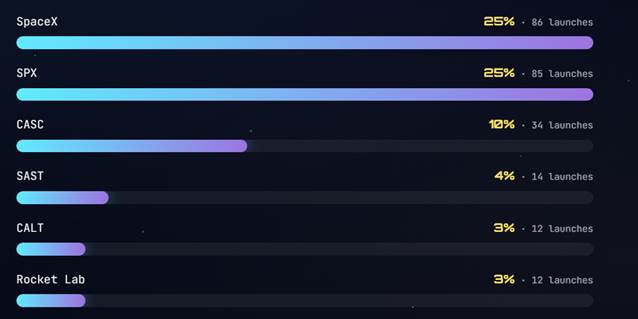
SpaceX has long been regarded as the commercial spaceflight powerhouse on the global stage, and its IPO has generated the reverberations that go well beyond its balance sheet.
Historically, most institutional investors were under-exposed to the fast-growing industry of the private space since the majority of the leading companies were privately based.
The IPO shifted the dynamics by introducing one of the most powerful aerospace companies globally to the public markets and making the whole industry more visible.
Such a high-profile listing has increased belief in commercial space as a viable investment category and not an experimental niche.
Satellite infrastructure, reusable launch vehicles, orbital manufacturing, and space-based computing solutions are some of the companies that are receiving increased attention by venture capital firms, sovereign wealth funds, pension funds and family offices.
The IPO has become a successful standard for investor valuation of future space companies.
Though not all startups will reach the size of SpaceX, its success in the market has shown that commercial space operations have the potential to provide major economic benefits if they are backed by well-developed technology, implementation, and rising customer demand.
Defense, Satellites, and AI Are Driving Investment
Among the trends that have been formed as a result of recent funding rounds is an increasing focus on practical commercial missions as opposed to strictly investigative missions.
There is a growing trend of investors moving capital to businesses that cater to the defense agencies, national security, telecommunication providers and enterprise customers.
Satellite constellations are ever-growing to enhance the connectivity of the world, and Earth observation companies offer precious data on agriculture, climate monitoring, insurance and disaster management.
Meanwhile, the development of artificial intelligence opens up new opportunities in the field of autonomous satellite operation, orbital data processing, and real-time analytics.
According to Reuters, firms specializing in technologies in the defense sector have become particularly appealing as governments across the globe allocate more money towards national security and robust communications infrastructure.
Investors are now more inclined to invest in a business that can produce a predictable income in terms of government contracts as well as commercial alliances.
Instead of spending on lofty long-term ambitions, the current investors are seeking companies that can address current issues with space-based technologies, with commercial demand that can be quantified.
The Global Space Economy Still Has Massive Growth Potential
The excitement of commercial space is far more than venture capital. According to industry analysts, the global space economy will grow far beyond $1 trillion in the next ten years as a result of satellite internet services, launch infrastructure, Earth observation, defense, manufacturing, and new technologies like orbital computing.
Although in the past, space exploration relied so much on government budgets, the current ecosystem is enjoying robust involvement in the industry by the private sector.
The barriers to entry have been greatly decreased by lower launch prices, reusable rockets, enhanced satellite production, and increasing commercial demand.
Big institutional investors are increasingly considering space infrastructure as they considered cloud computing or renewable energy in the past, as an incredibly specialized sector that eventually became part of mainstream investment themes.
Another major influx of funds may come in the future, should large firms like Blue Origin continue with large fundraising efforts, potentially increasing the number of investors in the commercial space industry.
What Investors Should Watch Next
Commercial space is a high-growth sector that is non-negligible in risk, even though its momentum is impressive. Several startups continue to need a lot of capital before they can become profitable, and technological hurdles, regulatory approvals, and delays in launching the business may impact business performance.
Investors are advised to be keen on firms that show a sustainable increase in revenues and not base their decisions on ambitious long-term forecasts.
Companies that have an already established customer relationship, scalable technology and a management team tend to be more stable to industry volatility.
The macroeconomic environment is also important. The level of interest rates, the availability of capital, the priorities of the government expenditure, and geopolitical processes might impact the flow of investments into emerging technologies.
However, there is a single obvious trend: commercial space is gradually becoming an investment theme, as opposed to a speculative frontier.
With technological innovation and institutional involvement growing, investors might consider investing in space as an augmented growth portfolio, alongside other industries, such as artificial intelligence, cybersecurity, and clean energy.
Finance Gossips Takeaway
The current statistics on funding reflect that commercial space is no longer a new experiment- it is a fast-growing industry with serious institutional capital investments.
The blockbuster IPO of SpaceX has served to reassure investors, attracting investments to enter startups working on satellites, launch systems, defense technologies and next-generation space infrastructure.
Although risks exist, the commercial space economy seems to be on a long-term growth trajectory because innovation, government demand, and individual investment are reinforcing each other.
To investors who want to look further afield, the decade ahead may not just be characterized by AI or renewable energy, but also the expanding business opportunities above the atmosphere of the planet.
Keep up with Finance Gossips to find out more about the up-and-coming industries, trends in investments, and the financial news that will shape the next economy.