
Will Fed Rate Hikes Push Mortgage Rates Even Higher?
Here’s What Homebuyers Need to Know
The one question that has gained importance for anyone intending on purchasing a home in this coming year is: What will happen to mortgage rates if the Federal Reserve raises interest rates again? Uncertainty is back in the housing market, with inflation being more intractable than anticipated and several Federal Reserve officials indicating that further increases in the rate are on the cards.
Most home buyers are of the view that whenever the Fed increases its benchmark interest rate, the mortgage rates automatically increase by the same margin. The real nature of the relationship is far more complex.

Various factors affect mortgage rates, which are inflation expectations, movements in the bond market, investor confidence, and the general economic expectation. This implies that mortgage rates may occasionally rise prior to the Fed intervening, or even decline despite an increase in the official interest rates.
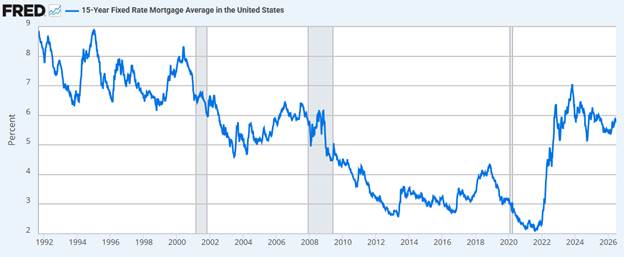
With the Fed debating in the markets whether it will tighten monetary policy in the later months of this year, homeowners, first-time buyers, and real estate investors are trying to comprehend the implications of these decisions on the cost of borrowing.
The process of estimating interest rate is never easy, but by having an idea of how this mechanism operates, buyers can make better financial choices.
Why the Federal Reserve Matters to the Housing Market
The Federal Reserve does not directly determine mortgage rates. It, instead, influences the federal funds rate, which is the rate at which the banks charge one another to borrow money on short notice.
This benchmark determines the price of borrowing across the economy, which includes credit cards, automobile lending, business borrowing, and consumer financing.

The mortgage rates, nonetheless, are more directly associated with long-term Treasury yields- especially the 10-year U.S Treasury note than the federal funds rate itself.
Those who purchase the mortgage-backed securities desire to be rewarded in terms of long-term inflation and economic risks. When such expectations evolve, the mortgage rates shift as well.
This is why mortgage rates tend to respond prior to a decision being announced by the Fed. Financial markets are always attempting to predict policy actions to come.
This means that in case investors think that the Fed is likely to increase rates since inflation is still stubbornly high, bond yields can immediately rise, dragging mortgage rates up even before any official announcement is made.
That is, the expectations rather than the day of a Federal Reserve meeting control mortgage rates.
Why Rate Hike Expectations Are Returning
In the first half of the year, a lot of investors anticipated the Federal Reserve to start reducing the rate of interest since the rate of inflation was reducing slowly. Such expectations have shifted greatly in the last couple of weeks.
Continued inflation, robust consumer expenditure, tensions in Middle East geopolitics, and elevated energy prices have all made the situation difficult.
Some Federal Reserve officials and policymakers who have anticipated the rates to be cut are now insinuating that a further increase in the rates might be required in case the inflation rate continues to be higher than the 2% seen by the central bank.
This has caused a rethink by financial markets on the direction interest rates can move in the rest of the year. Despite many economists continuing to anticipate that the Fed will leave rates unchanged, investors are progressively pricing the chances of tightening monetary policy in the event that inflation is not going to be kind.
In the case of the housing market, this uncertainty is nearly equal in importance to an actual rate increase since lenders price their mortgages according to future anticipations, and not the present condition alone.
What Higher Mortgage Rates Mean for Buyers
In case the mortgage rates keep increasing, then affordability will be even more of a challenge to potential homebuyers.
Such a slight rise in mortgage rates can significantly affect monthly payments. As an illustration, the difference between a 6% and 7% mortgage rate might not appear to be an earthshaker; however, over the life of a 30-year mortgage, it can, in tens of thousands of dollars, add up to more interest payments.
Increased monthly payments also decrease the purchasing power. Buyers who used to be eligible to have a bigger mortgage will have to reduce their budget or delay their purchase.
This has already helped in slowing down the sales of homes in various markets since the issues of affordability are still pressing on the demand.
The case of first time buyers is especially challenging. Many of them already have to grapple with high home prices, student loans and increased cost of living. Increased borrowing rates are just another challenge to accessing the housing market.
Could Mortgage Rates Fall Even if the Fed Raises Rates?
The biggest myth regarding housing finance is that the mortgage rates never go in the opposite direction to the Federal Reserve policy.
As a matter of fact, in many cases, markets tend to value future expectations months ahead. In case investors already anticipate an increase in rates, the mortgage rates might have already adjusted by the time the Fed takes action.
The Fed has also experienced times when it increased short-term interest rates and kept long-term mortgage rates steady- or even falling.
This normally occurs when investors are of the opinion that an increase in interest rates will effectively curb inflation and slow down the growth of the economy.
Assuming the inflation starts to decrease later this year, a single more Fed rate increase may not cause a fall in bond yields. In such a situation, the mortgage rates would stabilize or even fall.
This is why a lot of housing analysts advise buyers to pay close attention to Treasury yields and inflation reports, as they are as close as Federal Reserve meetings.
Fed policy and mortgages are related, though not necessarily directly.
Should Buyers Wait or Buy Now?
As people are still unsure about the future interest rates, a lot of potential buyers are wondering whether they should wait to buy a home.
The solution can be heavily reliant on personal financial situations as opposed to trying to time the market perfectly.
The waiting might translate to paying more monthly payments in the future in case mortgage rates continue to increase. Conversely, when rates go down, refinancing can still be enjoyed by most borrowers who buy today. There is not much that a buyer can do after having purchased a home. The housing experts usually emphasize that, one can refinance a mortgage in case the cost of borrowing money is lower, but he or she cannot alter the cost of buying a house.
Naturally, this strategy is only effective provided that buyers are financially ready to make payments at hand.
Expanding beyond a comfortable budget just in case rates could be lower in the future can lead to unwarranted financial risk.
Finally, affordability, employment stability, long term housing strategies and individual finances must be significantly more important than attempting to anticipate the Federal Reserve’s next step.
What Investors and Homeowners Should Watch Next
In the next few months, the trend in mortgage rates will be dependent on a number of factors.
The largest source of Federal Reserve decisions will continue to be inflation reports.
In case the trend of price pressures resumes its decline, the policymakers will experience less pressure to raise the monetary policy further.
But in case inflation is high, further rate increases might be put back on the table.
Performance of the bond markets will also be critical. When loaning in the form of mortgages, mortgage lenders pay close attention to the Treasury yields, i.e. any changes in the investor sentiment can quickly affect the cost of a loan.
Lastly, the economy will still be influenced by geopolitical factors, oil prices and labor market conditions, which will keep forming the bigger picture.
As recent events have demonstrated, the world can quickly modify the inflation expectation and interest rate forecasts due to unanticipated developments happening across the world.
To those who are borrowing, it will be as important as viewing mortgage advertisements.
Finance Gossips Takeaway
The likelihood of further Federal Reserve rate increases has put mortgage rates back in focus.
Although an increase in benchmark interest rates usually causes an increase in the cost of home loans, the correlation is much greater than many individuals are aware of.
The expectation of inflation, Treasury yields and the general market mood are all significant in the direction mortgage rates will eventually turn.
To the homebuyers, it is not just about predicting the next Fed meeting, but to make sure that any home purchase they make easily fits their long-term financial objectives.
The financial market will keep on varying, but good financial planning will be the best asset of owning a home.
Feel like keeping up with the mortgage trends, the news in the housing market and the news regarding personal finance?
Subscribe to Finance Gossips today and have expert information, interest rate analysis and the latest economic news sent directly to you.