
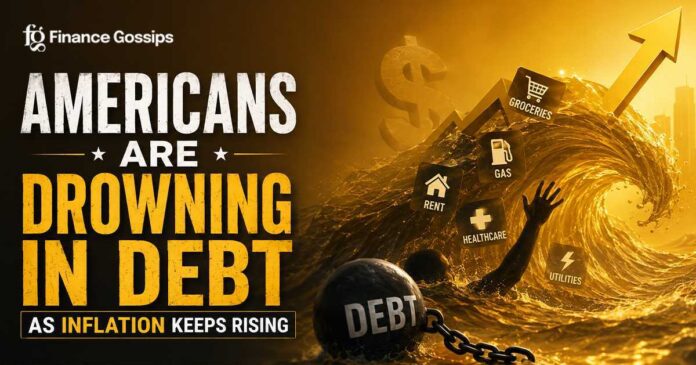
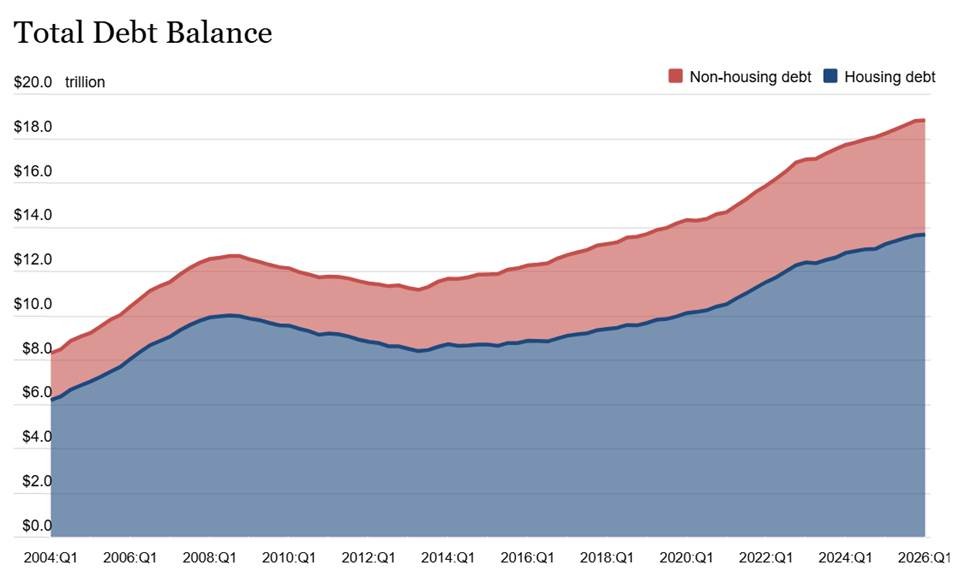
The domestic debt in the United States is at an all-time high, indicating the extent of financial strain American families are experiencing in 2026. The Federal Reserve Bank of New York stated that the total household debt reached almost $18.8 trillion in the first quarter of the year. The escalating inflation, high cost of borrowing and rising cost of living are pushing consumers to remain financially stable.
Meanwhile, inflation still remains a significant issue. Inflation increased to one of the highest rates in the recent years with consumer prices increasing 3.8% in April compared to last year. The daily living costs are increasing and with that, most households are increasingly using loans and credit cards only to afford their day-to-day expenditures.
Debt Levels Continue to Climb
Mortgage debt is the biggest component of household borrowing in the U.S. The mortgage balances have now gone up to about $13.2 trillion motivated by the high home prices and the high interest rates. Auto loan balances have also risen drastically up to approximately $1.69 trillion as the prices of vehicles are still high and the cost of financing is on the rise too.

Another increasing problem is credit card debt. Despite a slight decrease in balances in the quarter, the total credit card debt is approximately at $1.25 trillion, which is nearly at record levels. A large number of Americans are turning to credit cards to cover their basic expenses such as groceries, gas, health and utility bills.
Millions of borrowers also face challenges due to student loan debt. Although the total balances are slightly declining, the number of missed payments is increasing once more, because the repayment obligations will persist post-pandemic pause. According to financial experts, the number of households that are starting to exhibit signs of stress is increasing, particularly the younger and low-income consumers.
Inflation Is Making Everyday Life Harder
Inflation is one of the largest causes of the increase in debt. Basic needs like food, rent, fuel and insurance have been on the rise in the last one year. Although there has been an increase in the wages of some workers, most households continue to perceive that their earnings are not sufficient to support the increased prices.
Even increased interest rates are exacerbating the pressure. Mortgage rates have remained near 6.51%, whereas auto loans and credit card interest rates have been greatly increased. This implies that consumers are not just borrowing more, they are also paying a higher price to borrow.
Consequently, saving money or lightening debt is becoming a challenge to a number of families. On the contrary, they are using personal loans and credit cards to meet their monthly bills. The young generations, especially those of Gen Z and millennials are being particularly affected as they are already struggling with high housing rates, university debts, and increased living costs.
What This Means for the Economy
An increase in household debt poses threats to the aggregate economy too. One of the largest contributors of economic growth in the United States is consumer spending. If families are crushed between debt and inflation, then spending may ultimately decelerate, impacting businesses and economic activity.
Consumer spending has so far been fairly robust, but economists are increasingly worried about the financial strain in the long term. In case inflation continues to be high, and interest rates on loans are high, more families will find it hard to make ends meet in the coming months.

Finance Gossips Takeaway
The debt crisis that America is experiencing is an indicator of the financial situation that a lot of households are going through. Millions of consumers in the nation are being strained by rising prices, costly loans, and growing dependence on credit.
Although the economy has remained resilient, the long-term effects of high levels of debt cannot be overlooked.
Wish to keep in touch with inflation trends, debt news, and personal finance information? Sign up with Finance Gossips today and have the latest financial news.

