
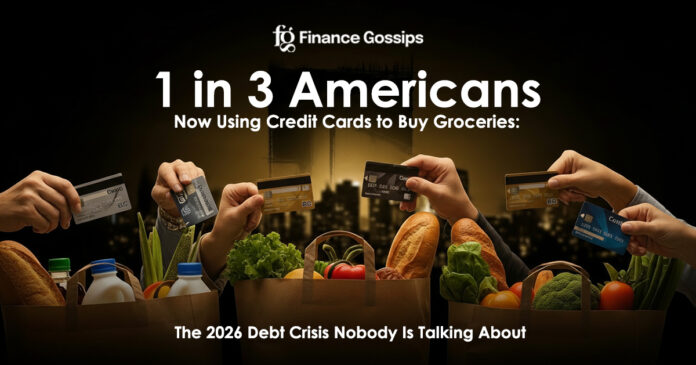
In 2026, a quiet but alarming financial shift is taking place. More Americans than ever are relying on credit cards not for luxury purchases-but for basic necessities like groceries.
According to recent trends, 1 in 3 Americans are now using credit cards to buy food, a signal that financial pressure is reaching deeper into everyday life. What was once a temporary solution has become a recurring habit, raising concerns about a growing debt crisis.
Across every major personal finance advice forum, discussions are shifting from budgeting tips to survival strategies-because for many households, the math simply isn’t adding up anymore.
Why Are People Using Credit Cards for Groceries?
This trend didn’t happen overnight. It’s the result of several overlapping economic pressures.

1. Persistent Inflation
Even as inflation stabilizes on paper, grocery prices remain significantly higher than pre-2020 levels. Essentials like milk, eggs, and produce continue to strain household budgets.
2. Stagnant Wage Growth
For many households, income hasn’t kept pace with rising costs. This gap is forcing people to rely on credit to bridge everyday expenses.
3. Depleted Savings
Many families exhausted their savings during previous economic disruptions. Without a financial cushion, credit cards become the fallback.
4. Easy Access to Credit

Credit cards are convenient, widely accepted, and often the fastest way to cover short-term cash shortages-making them an easy but risky solution.
These realities are frequently highlighted in any personal finance advice forum, where users increasingly share concerns about relying on debt just to get through the month.
Why This Trend Is So Dangerous
Using credit cards for groceries may seem harmless in the short term-but it carries serious long-term risks.
1. High Interest Rates
Credit card interest rates in 2026 remain extremely high. Carrying a balance can quickly turn small grocery bills into large debts.
2. Debt Snowball Effect
What starts as a $200 grocery charge can grow rapidly if only minimum payments are made.
3. Reduced Financial Flexibility
As more income goes toward debt repayment, less is available for savings, investments, or emergencies.
4. Psychological Stress
Financial insecurity can lead to anxiety, burnout, and poor decision-making.
If you’re already feeling overwhelmed, you may find practical guidance in How to Manage and Overcome Financial Anxiety, which addresses the emotional side of financial stress.
From Convenience to Dependence
Credit cards were originally designed as a convenience tool-not a survival mechanism.
But in 2026, that line is blurring.
Many households are no longer using credit occasionally-they’re depending on it monthly. This shift from convenience to dependence is what makes the current situation particularly concerning.
What This Says About the Economy
The rise in credit card usage for essentials is a warning sign.
It suggests:
- Household budgets are under severe pressure
- Savings rates are declining
- Debt levels are quietly rising
And yet, this issue isn’t getting the attention it deserves-making it, in many ways, a “hidden crisis.”
How to Break the Cycle
If you find yourself relying on credit for groceries, the good news is that there are ways to regain control.
1. Rebuild a Basic Budget
Start by tracking your income and essential expenses. Even small adjustments can create breathing room.
For a deeper look at why traditional budgeting often fails-and how to fix it-read Why Budgeting Fails for Most People.
2. Prioritize Essential Spending
Separate needs from wants. Focus on covering necessities without expanding credit usage further.
3. Pay More Than the Minimum
If you’re carrying a balance, aim to pay more than the minimum to reduce interest accumulation.
4. Build an Emergency Buffer
Even a small savings fund can reduce reliance on credit cards during tough weeks.
Increasing Income to Offset Costs
Cutting expenses is only one side of the equation-boosting income can make a significant difference.
Many individuals are exploring side hustles to regain financial stability:
- Some are finding ways to earn extra money with your car through delivery or ride-sharing
- Others are researching how to make money driving my own car to create consistent supplemental income
These strategies, widely discussed in a personal finance advice forum, help reduce dependency on credit by improving cash flow.
If you’re looking for more scalable income opportunities, Best Secret Websites to Make Money Online in 2026 offers additional ideas to diversify your earnings.
The Role of Financial Awareness
One of the biggest challenges is that many people don’t realize how quickly debt can grow.
Awareness is key:
- Understand your interest rates
- Monitor your spending patterns
- Take action early before debt becomes unmanageable
A Shift in Financial Behavior
This trend reflects a broader shift in how people manage money in 2026.
Instead of long-term planning, many are focused on short-term survival. While understandable, this approach can lead to long-term financial instability if not addressed.
Across every personal finance advice forum, one message is becoming increasingly clear:
financial resilience requires both discipline and adaptability.
Final Thoughts
The fact that 1 in 3 Americans are using credit cards for groceries isn’t just a statistic-it’s a signal.
A signal that costs are rising faster than incomes.
A signal that financial stress is becoming more widespread.
And a signal that many households are one step away from deeper debt.
But it’s not irreversible.
With the right strategies-budgeting smarter, increasing income, and managing debt proactively-it’s possible to break the cycle and regain control.
Because in a time of financial uncertainty, awareness isn’t just power-it’s protection.
FAQs
Not necessarily-if you pay the balance in full each month. Problems arise when balances carry over and accumulate interest.
Rising living costs, stagnant wages, and reduced savings are pushing households to rely on credit.
Focus on budgeting, cutting non-essential expenses, and increasing income through side hustles.
High interest rates can quickly turn small purchases into long-term debt.
Yes. Many people use strategies like auto make money ideas or learn how to make money driving my own car to improve cash flow and reduce reliance on credit.

